


Is Burning Incense Bad for You What Science Says
Burning incense can impact your health, as recent studies link it to respiratory issues and exposure to carcinogens. For example, researchers found higher rates of respiratory symptoms and certain cancers among frequent incense users:
|
Study |
Findings |
Health Risks |
|---|---|---|
|
Sturton et al. (1966) |
High incense use in Hong Kong linked to cancer |
74.5% of nasopharyngeal cancer cases had exposure |
|
Temple Workers Study |
Temple workers showed chronic respiratory symptoms |
Odds ratio up to 4.5 for nasal and thoracic allergies |
Many people, especially women and small apartment dwellers, use Lunae’s Nepal Handmade Incense Sticks to create a calming space for meditation, yoga, or relaxation 🧘♀️. You can enjoy these benefits while staying mindful of safe practices.
Key Takeaways
- Burning incense can harm your health, leading to respiratory issues and increased cancer risks. Be aware of these potential dangers.
- Always burn incense in well-ventilated areas to reduce smoke buildup and protect your air quality. This simple step can make a big difference.
- Choose natural incense over synthetic options. Natural ingredients are safer and can enhance your wellness routine without harmful chemicals.
- Limit the frequency and duration of incense burning, especially in small spaces. This helps minimize indoor air pollution and health risks.
- If you have asthma or allergies, consider using low-smoke incense and consult with a healthcare professional for safe practices.
Burning Incense and Health Risks
Scientific Findings on Incense Smoke
When you burn incense, you release a mix of particles and gases into the air. Scientists have found that this smoke can affect your health in several ways:
- Burning incense can cause headaches, respiratory problems, and allergic reactions.
- The smoke contains harmful compounds like carbon, sulfur, nitrogen oxides, formaldehyde, and carcinogenic polycyclic aromatic compounds.
- The amount of particulate matter from burning incense is much higher than what you get from cigarettes.
Researchers have studied how incense smoke impacts people, especially those who use it often or in small spaces. Here are some important findings:
- Inhaling incense smoke can harm your respiratory system.
- A study of over 4,000 school children in Hong Kong found that burning incense led to reduced lung function and higher risks of bronchitis and bronchiolitis.
- Temple workers exposed to incense smoke had more chronic respiratory symptoms than church workers.
You can see more details in the table below:
|
Study |
Findings |
|
|---|---|---|
|
Sturton et al. (1966) |
High incidence of nasopharyngeal carcinoma in incense users; 74.5% of cases exposed to incense smoke. |
|
|
Yang et al. |
Significant association between incense burning and cough symptoms in children. |
|
|
Ho et al. |
Increased risk of acute irritative respiratory symptoms in temple workers; odds ratios of 4.5 for throat irritation and 4.14 for nose irritation. |
|
|
Alarifi et al. |
Exposure to incense caused ultrastructural changes in lung tissues of rats, indicating compromised respiratory efficiency. |
If you have asthma, allergies, or other breathing issues, you may notice more symptoms when burning incense. Sensitive groups, such as children, older adults, and people with chronic conditions, should take extra care.
Tip: If you love using incense for meditation or relaxation 🧘♀️, try to burn it in a well-ventilated area to reduce health risks.
Chemicals and Pollutants in Incense
Incense smoke contains a variety of chemicals and pollutants that can affect your health. Some of the most common include:
|
Chemical/Pollutant |
Health Effects |
|---|---|
|
Particulate Matter (PM) |
Can cause cardiovascular disease, inflammation, and oxidative stress. These particles can reach deep into your lungs. |
|
Polycyclic Aromatic Hydrocarbons (PAHs) |
Linked to hypertension, heart disease, stroke, kidney disease, and cancer. |
|
Carbon Monoxide (CO) |
Raises cardiovascular risks, especially in rooms with poor airflow. |
|
Diethylphthalate (DEP) |
Suspected carcinogen; may cause liver toxicity and affect metabolism. |
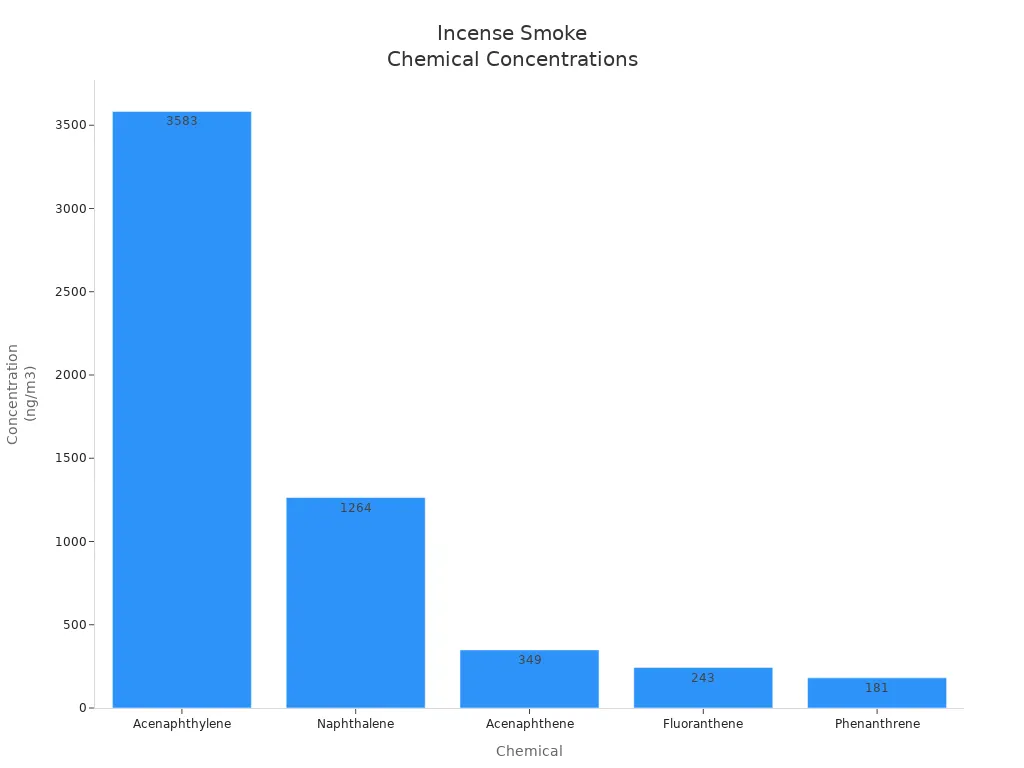
You may also find high concentrations of chemicals like acenaphthylene, naphthalene, and fluoranthene in incense smoke. These substances can irritate your eyes and airways, worsen asthma or COPD, and increase your risk of respiratory diseases.
Some people believe that natural incense is always safe, but even botanicals can trigger allergies or asthma. Pollutants can build up indoors, even if you only burn incense occasionally.
Note: Always check the ingredients in your incense and choose natural options when possible for better wellness at home 🌿.
Incense vs Other Indoor Pollutants
You might wonder how burning incense compares to other sources of indoor air pollution, like candles or cigarettes. Research shows that incense smoke can be just as harmful as passive cigarette smoke. In some cases, burning incense produces even more pollutants than tobacco.
- Incense releases particulate matter and gases that can exceed government safety limits.
- The slow burning process creates smoke that lingers in the air, making it easy to inhale harmful substances.
- Studies show that incense smoke can trigger inflammation in lung cells, similar to the effects of cigarette smoke.
If you live in a small apartment or use incense for yoga, meditation, or relaxation, you should pay attention to air quality. Sensitive groups, such as people with asthma, allergies, ADHD, or anxiety, may feel the effects more strongly.
Alert: Even small amounts of incense can affect indoor air quality, especially in closed spaces 🏠. Ventilate your room and limit how often you burn incense to protect your health.
FAQs
Q: Is burning incense safe for people with asthma or allergies?
A: Burning incense can worsen symptoms for people with asthma or allergies. You should use incense in well-ventilated areas and consider natural, low-smoke options.
Q: Does burning incense increase cancer risk?
A: Some studies link frequent incense use to higher rates of certain cancers, such as nasopharyngeal carcinoma. Using incense occasionally and choosing natural products may help lower your risk.
Natural vs Synthetic Incense
Natural Incense Ingredients
You may notice that high-quality natural incense uses pure plant-based materials. These ingredients often include:
- Sandalwood
- Frankincense
- Myrrh
- Cedar
- Palo Santo
- Herbal blends
When you choose natural incense, look for botanical names like Boswellia (frankincense), Commiphora (myrrh), or Santalum (sandalwood) on the label. Natural binders such as wood powder help hold the incense together without synthetic adhesives. These features make natural incense safer for indoor use and better for your wellness routine 🌱.
Synthetic Additives and Risks
Many mass-produced incense sticks contain synthetic chemicals. These additives can affect your health. The table below shows common synthetic compounds and their risks:
|
Compound |
Function in Incense |
Potential Concerns |
|---|---|---|
|
Phthalates |
Fixative stability |
Endocrine disruption, respiratory issues |
|
Synthetic musks |
Fragrance base |
Allergic reactions, bioaccumulation |
|
Aldehydes |
Aroma enhancement |
Irritation, possible carcinogenicity |
|
Parabens |
Preservative |
Hormonal effects, skin sensitivity |
You should avoid incense with vague terms like "fragrance" or "perfume" on the label. These often hide synthetic ingredients that may trigger allergies or worsen air quality, especially when Burning Incense in small spaces.
Why Choose Lunae Incense
Lunae’s Nepal Handmade Incense Sticks use only natural ingredients and traditional methods. You get a gentle aroma that supports meditation, yoga, and relaxation without harsh chemicals. Choosing natural incense helps you create a calming space while reducing exposure to indoor pollutants.
Lunae Incense Collection
You can explore Lunae’s full incense collection for a variety of natural scents. If you want to enhance your ritual, check out their incense accessories for safe and stylish burning. These options fit well in small apartments and support your wellness journey 🧘♀️.
Tip: Natural incense offers a safer, more mindful way to enjoy aromatherapy at home.
FAQs
Q: How can I tell if incense is natural or synthetic?
A: Check the label for botanical names and avoid products with "fragrance" or "perfume" as ingredients.
Q: Is natural incense better for meditation and yoga?
A: Yes, natural incense provides a cleaner aroma and fewer pollutants, making it ideal for wellness practices.
Burning Incense in Small Spaces
Respiratory Health and Sensitive Groups
Small apartments and enclosed rooms can trap smoke and pollutants from burning incense. You may notice that the air feels heavier or that you cough more often. People with asthma, allergies, ADHD, or anxiety can feel these effects more strongly. Children, older adults, and anyone with breathing problems face higher risks.
When you burn incense in a small space, you release toxic gases like carbon monoxide and sulfur dioxide. These gases can irritate your nose and throat. Particulate matter from incense can cause coughing and make it harder to breathe. Over time, exposure to these pollutants can increase your risk of heart disease, lung cancer, and even cognitive decline. If you have sensitive airways, incense smoke can trigger symptoms quickly.
Tip: If you or someone in your home has asthma or allergies, consider using incense less often or choosing natural, low-smoke options. Always keep windows open when possible. 🌬️
Safe Use in Apartments
You can enjoy incense safely in a small apartment by following a few simple steps:
- Burn incense in a well-ventilated area to prevent smoke buildup.
- Avoid burning incense in confined spaces or rooms without windows.
- Do not burn incense if you are pregnant, or if children or pets are present.
- Extinguish incense properly to prevent fire hazards.
- Choose high-quality, natural incense to reduce harmful smoke.
These practices help keep your indoor air cleaner and protect everyone in your home. 🏠
Incense for Meditation and Relaxation
Many people use incense to create a peaceful space for meditation or relaxation. Natural scents can slow your heart rate, calm your nervous system, and help you focus. Incense has a long history in spiritual practices, where it supports relaxation and a sense of well-being. Studies show that incense can purify the air and generate negative ions, which may boost your mood and help you feel more balanced.
Note: For the best experience, use incense during meditation in a space with good airflow. This helps you enjoy the calming benefits while keeping your air fresh. 🧘♀️
FAQs
Q: Is it safe to burn incense in a bedroom?
A: You should only burn incense in a bedroom if you can open a window and keep the room well-ventilated. Never leave incense burning unattended.
Q: Can incense trigger anxiety or ADHD symptoms?
A: Strong scents or smoke can sometimes trigger anxiety or distract people with ADHD. Choose gentle, natural incense and use it in moderation.
Safe Practices for Burning Incense
Tips to Reduce Health Risks
You can enjoy the benefits of Burning Incense while protecting your health by following these simple steps:
- Limit each session to 5–10 minutes in small rooms or 15–30 minutes in larger spaces.
- Open windows and use an exhaust fan to keep fresh air moving.
- Place incense away from sleeping areas, children, and pets.
- Use a HEPA air purifier with activated carbon before, during, and after burning.
- Burn incense only on special occasions, not every day. Try low- or no-smoke options for sensitive groups.
Tip: Good ventilation is the best way to reduce indoor air pollution. Open windows, use fans, or run your air conditioner with vents open to keep your air clean. 🌬️
Choosing Incense Holders
A safe incense holder prevents fire hazards and protects your surfaces. Look for these features:
|
Feature |
Description |
|---|---|
|
Material |
Choose heat-resistant materials like brass or soapstone for safety. |
|
Placement |
Set the holder on a flat, non-flammable surface away from drafts. |
|
Maintenance |
Use a coaster or holders with feet to avoid heat damage to tables or shelves. |
- Always place your holder on a stable, heat-resistant surface such as concrete or brick.
- Make sure the holder cannot tip over easily.
You can try Lunae’s 2-in-1 Glass Incense Holder and Sticks Organizer for a stylish and safe burning experience. ✨
Recommended Products for Safe Use
Choose incense that lists all ingredients and avoids vague terms like “fragrance.” Look for natural, small-batch options with clear sourcing. Here are some safe choices:
- Argentine Hand-Rolled Petal Aroma Incense Sticks
- Bhutanese Zhingkham Kunchhab Chhoetrin Incense Sticks
- Satya Nagchampa Handmade Natural Meditation Healing Incense Sticks
These options support your wellness routine and help you create a calming space for meditation or yoga 🧘♀️.
More Tips from Lunae Blog
You can find more incense safety tips, wellness inspiration, and product guides on the Lunae Blog. Explore topics like incense for small apartments, meditation, and air quality for sensitive groups.
Note: Using gentle, natural scents and practicing good ventilation can make your home safer and more relaxing.
FAQs
Q: How often is it safe to burn incense indoors?
A: Limit burning to a few times per week and keep sessions short, especially in small or poorly ventilated rooms.
Q: What should I do if incense smoke bothers my breathing?
A: Stop burning incense, open windows, and use an air purifier. Choose low-smoke or natural incense in the future.
You have seen that Burning Incense can affect your health in many ways. Recent studies show links to respiratory issues, kidney problems, and increased blood lead levels:
|
Evidence Type |
Findings |
|---|---|
|
Case Report |
Long-term incense use led to anemia and high blood lead in one woman. |
|
Cross-Sectional Study |
Preschoolers exposed to incense had higher blood lead levels. |
|
Cohort Study |
Incense users faced a 23% higher risk of kidney disease. |
|
Experimental Study |
Rats showed kidney inflammation after incense exposure. |
|
Mechanism |
Oxidative stress may explain these effects. |
To protect your wellness, you should:
- Limit how long you burn incense.
- Keep your space well-ventilated.
- Use air filters to reduce harmful particles.
Studies show that incense raises indoor air pollution, so you need to manage exposure for better health. 🌿
Choose natural incense and safe practices to enjoy a calming space. Explore Lunae’s collection for high-quality options that support your meditation or relaxation routine. For more on incense and wellness, check out resources like Incense - Benefits, Use, History & Health.
🧘♀️ You can create a peaceful home while caring for your health.
FAQ
Is it safe to burn incense every day?
You should avoid burning incense daily. Frequent use increases indoor air pollution and may affect your respiratory health. Try to limit sessions to a few times per week for better wellness at home. 🌱
What is the best incense for sensitive groups?
Choose natural, low-smoke incense sticks. Look for clear ingredient lists and avoid synthetic fragrances. Lunae’s Nepal Handmade Incense Sticks offer a gentle option for people with asthma, allergies, or anxiety. 🧘♀️
Can incense help with meditation or anxiety?
Yes, natural incense can create a calming atmosphere. You may find it easier to relax, meditate, or manage stress with soothing scents. Always use incense in a well-ventilated space for the best experience.
How do I reduce smoke when burning incense in a small apartment?
Open windows and use a fan to keep air moving. Burn incense near a window or air purifier. Limit how long you burn incense to keep your indoor air fresh and safe. 🏠
Are incense sticks safe for pets?
Incense smoke can irritate pets’ lungs. You should keep pets in another room while burning incense. Choose natural, low-smoke options and ventilate your space to protect your furry friends.
🌙 Continue Your Ritual


